

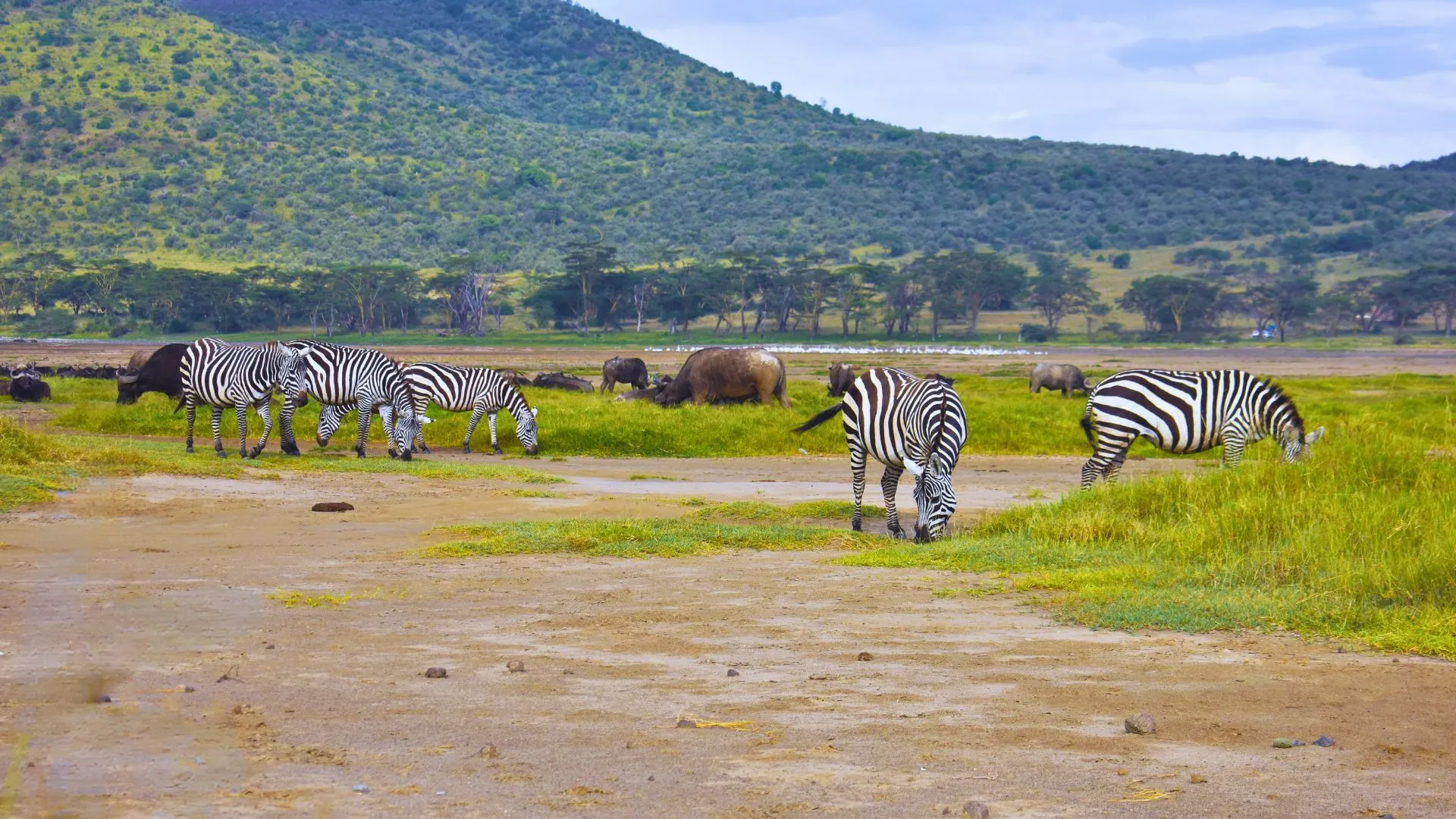
Discover Lake Nakuru National Park in Kenya. Learn about wildlife, flamingos, rhinos, safari activities, best time to visit, history, location, accommodation, and travel tips in this complete guide.
Lake Nakuru National Park is one of Kenya’s most famous wildlife conservation areas, renowned for its breathtaking landscapes, abundant wildlife, and spectacular birdlife. Located in the heart of the Great Rift Valley, the park surrounds the shallow alkaline Lake Nakuru and covers approximately 188 square kilometers (73 square miles).
Established in 1961, the park has grown from a bird sanctuary into a world-famous safari destination that attracts thousands of visitors every year. It is recognized as one of the best places in Kenya to see endangered rhinos, tree-climbing lions, and over 450 bird species.
Where is Lake Nakuru National Park?
Lake Nakuru park is situated in Nakuru County, about 160 kilometers (100 miles) northwest of Nairobi.
Distance from Major Destinations
Nairobi – 2.5 to 3 hours by road
Naivasha – 1 hour
Eldoret – 3 hours
Kisumu – 3.5 hours
The park is easily accessible by both road and air, making it a popular destination for day trips and weekend safaris.
History of Lake Nakuru National Park
Lake Nakuru was initially protected as a bird sanctuary in 1957 due to its massive flamingo population. In 1961, it was officially gazetted as a national park.
Over the decades, conservation efforts have transformed it into one of Kenya’s leading rhino sanctuaries. Today, it plays a critical role in protecting both black and white rhinos and serves as an important breeding ground for several endangered species.
The park is also part of the Kenya Lake System in the Great Rift Valley, recognized for its outstanding ecological value.
Wildlife in Lake Nakuru Park
Lake Nakuru National Park is famous for its rich biodiversity.
Mammals: Visitors can spot: White rhinos, Black rhinos, Lions, Tree-climbing lions, Leopards, African buffaloes, Rothschild’s giraffes, Zebras, Waterbucks, Impalas, Warthogs, Hyenas, Baboons, Vervet monkeys, Bushbucks
The park is one of Kenya’s best locations for guaranteed rhino sightings.
Birdlife
Lake Nakuru is internationally recognized as a birdwatcher’s paradise.More than 450 bird species have been recorded, including: Greater flamingos, Lesser flamingos, African fish eagles, Great white pelicans, Marabou storks, Pied kingfishers, Hamerkops, Cormorants, Herons, Egrets, Sacred ibises, The lake’s flamingo population varies depending on water levels and food availability.
The Famous Flamingos
Lake Nakuru gained worldwide fame because of the millions of pink flamingos that once covered its shoreline. Although water level changes have caused flamingos to migrate between Rift Valley lakes, thousands can still be seen during favorable conditions, making birdwatching an unforgettable experience.
Rhino Sanctuary
Lake Nakuru National Park is one of Kenya’s oldest rhino sanctuaries. It protects both the Endangered black rhinos and the Southern white rhinos. Strict anti-poaching measures have helped increase rhino populations, making the park a conservation success story.
Best Time to Visit Lake Nakuru National Park
Dry Season (June–October) Best for: Wildlife viewing, Game drives, Photography, Rhino sightings
Green Season (November–May) Ideal for: Birdwatching, Lush landscapes, Fewer tourists, Lower accommodation rates
Things to Do in Lake Nakuru National Park
1. Game Drives
Morning and evening game drives offer opportunities to see: Rhinos, Lions, Leopards, Buffaloes, Giraffes, Zebras
2. Bird Watching: The park is one of Africa’s premier birdwatching destinations, attracting ornithologists and photographers from around the world.
3. Photography: Popular photography subjects include: Flamingos, Rhinos, Acacia forests, Waterfalls, Lake landscapes, Sunrises and sunsets
4. Visit Baboon Cliff: Baboon Cliff provides panoramic views of the lake and surrounding landscapes, making it one of the park’s most visited viewpoints.
5. Makalia Falls: Makalia Falls is a scenic waterfall located in the southern section of the park. It is especially impressive during the rainy season.
6. Nature Viewing: The park features diverse ecosystems, including: Alkaline lake, Acacia woodland, Grasslands, Rocky escarpments, Euphorbia forests
Accommodation Near Lake Nakuru National Park
Visitors can choose from: Luxury safari lodges, Mid-range lodges, Tented camps, Budget campsites, Hotels in Nakuru City
Many accommodations offer spectacular views of the lake and wildlife.
Park Entrance Gates: The main access points include: Main Gate, Lanet Gate, Nderit Gate
Climate
Lake Nakuru enjoys a mild climate throughout the year. Average temperatures: Day: 20–28°C, Night: 10–15°C. Rainfall is highest between March and May.
Why Visit Lake Nakuru National Park?
Lake Nakuru National Park offers a unique combination of wildlife, birdlife, and scenic beauty. Highlights include: Exceptional rhino sightings, Tree-climbing lions, Rich bird diversity, Stunning viewpoints, Beautiful waterfalls,, Easy access from Nairobi, Family-friendly safaris, Year-round wildlife viewing
Its compact size makes it possible to experience a rewarding safari in a single day while still providing opportunities for longer stays.
Frequently Asked Questions (FAQ)
Q: Is Lake Nakuru National Park worth visiting?
A: Yes. It is considered one of Kenya’s top safari destinations, especially for rhino conservation, birdwatching, and scenic game drives.
Q: What animals are famous in Lake Nakuru National Park?
A: The park is best known for black and white rhinos, lions, Rothschild’s giraffes, buffaloes, zebras, leopards, and large numbers of flamingos when conditions are favorable.
Q: How far is Lake Nakuru National Park from Nairobi?
A: The park is approximately 160 km (100 miles) from Nairobi, with a driving time of about 2.5–3 hours.
Q: What is the best time to visit Lake Nakuru National Park?
A: The dry season (June to October) is best for wildlife viewing, while the wet season (November to May) is excellent for birdwatching and lush scenery.
Q: Can you see the Big Five in Lake Nakuru National Park?
A: No. The park has four of the traditional Big Five except elephants. Rhinos, lions, leopards, and buffaloes are present, but elephants are not found in the park.